Posts

Workforce Innovation and Opportunity Act For Population with Disabilities

Image
President Obama President Barack Obama signed the Workforce Innovation and Opportunity Act (WIOA) into law on July 22, 2014. WIOA is designed to help job seekers access employment, education, training, and support services to succeed in the labor market and to match employers with the skilled workers they need to compete in the global economy. Congress passed the Act by a wide bipartisan majority; it is the first legislative reform in 15 years of the public workforce system. Every year the key programs that form the pillars of WIOA help tens of millions of job seekers and workers to connect to good jobs and acquire the skills and credentials needed to obtain them. The enactment of WIOA provides opportunity for reforms to ensure the American Job Center system is job-driven—responding to the needs of employers and preparing workers for jobs that are available now and in the future. Read more..


Common Gene Variants Account for Most Genetic Risk for Autism: Roles of Heritability, Mutations, Environment Estimated – NIH-funded Study

Image
July 20, 2014 • NIH Press Release Most of the genetic risk for autism comes from versions of genes that are common in the population rather than from rare variants or spontaneous glitches, researchers funded by the National Institutes of Health have found. Heritability also outweighed other risk factors in this largest study of its kind to date. About 52 percent of the risk for autism was traced to common and rare inherited variation, with spontaneous mutations contributing a modest 2.6 percent of the total risk. “Genetic variation likely accounts for roughly 60 percent of the liability for autism, with common variants comprising the bulk of its genetic architecture,” explained Joseph Buxbaum, Ph.D.  , of the Icahn School of Medicine at Mount Sinai (ISMMS), New York City. “Although each exerts just a tiny effect individually, these common variations in the genetic code add up to substantial impact, taken together.” Buxbaum, and colleag...

UN Disability Treaty Clears Senate Committee

Image
By Michelle Diament UN Disability Treaty Two years after rejecting an international disability rights treaty, the U.S. Senate is poised to reconsider the matter. The Senate Foreign Relations Committee approved the United Nations Convention on the Rights of Persons with Disabilities by a 12 to 6 vote Tuesday, 7/22/2014. The treaty, which establishes an international standard for disability rights similar to what’s already in place domestically through the Americans with Disabilities Act, is now headed to the full Senate where it would need a two-thirds majority vote to be ratified. This is the second time that the U.N. Convention is making its way through the Senate. The same committee also approved the treaty in 2012 before it failed on a largely party-lines vote that year in the full Senate. A coalition of more than 800 disability, civil rights, faith, business and veterans organizations favor ratification. But the treaty has faced st...

Justice Department Developing Disability Training For Police

Image
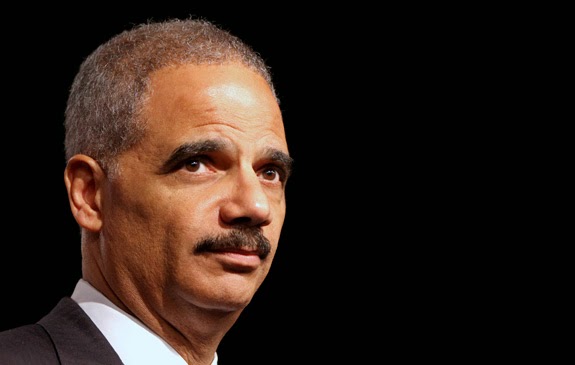
By Michelle Diament Attorney General Eric Holder Plans are in the works at the U.S. Department of Justice to roll out law enforcement training focused on people with disabilities. The Justice Department’s Community Relations Service — a division that steps in to help communities address tension stemming from civil rights issues — is currently working on the effort, Attorney General Eric Holder said. The move follows the introduction of a similar training program in March designed to address law enforcement relations with the transgender community. “Earlier this year, you launched a groundbreaking transgender law enforcement cultural professionalism training. And I know a similar training initiative, focused on the needs of individuals with cognitive disabilities, is being developed as we speak,” Holder said at a gathering of the Community Relations Service last week. Justice Department officials did not provide details about the plans. Holder’s comments, how...

Congress Passes Bill Limiting Sheltered Workshop Eligibility

Image
   in Share 32      By Michelle Diament July 10, 2014 Cindy Iames, right, and Damien Ross make less than minimum wage working at Chimes Cafe in Baltimore. A bill that would significantly limit young people with disabilities from entering sheltered workshop programs is headed to President Barack Obama’s desk. The U.S. House of Representatives voted 415 to 6 Wednesday to approve the Workforce Innovation and Opportunity Act. Included in the bill are major changes to the path from school to work for those with disabilities.

EEOC Sues Wal-Mart for Disability Discrimination

Image
Retailer Rescinded Accommodation, Then Fired Intellectually Disabled Employee, Federal Agency Charges ROCKFORD, Ill. - The U.S. Equal Employment Opportunity Commission (EEOC) filed a lawsuit Walmart against Wal-Mart Stores, Inc., alleging that the giant retailer fired an intellectually disabled employee at a Rockford Walmart store after it rescinded his workplace accommodation. "What our investigation indicated," said John Rowe, the EEOC district director in Chicago, who managed the federal agency's pre-suit administrative investigation, "is that Wal-Mart rescinded a long-standing practice of giving written job assignments to the employee, William Clark. That accommodation had been the key to permitting Clark to successfully perform his job during an 18 year career at Wal-Mart and to his meeting the company's performance expectations. We determined that shortly after rescinding the accommodation, Wal-Mart began disciplining Mr. Clark for sup...

Senator Calls For Expansion Of Community-Based Services

Image
By Michelle Diament A new proposal in the U.S. Senate would eliminate a government bias toward placing people with disabilities in institutional rather than community-based settings. Senator Tom Harkin: D-Iowa U.S. Sen. Tom Harkin, D-Iowa, said Tuesday he is introducing a bill that would put an end to what’s known as the “institutional bias.” Current law requires Medicaid to provide nursing home services to people with disabilities, but does not mandate that home and community-based options be offered. As a result, many states have long waiting lists for individuals wishing to obtain services in the community and a Senate report last year found that over 200,000 working-age Americans remain segregated in nursing homes. Harkin’s proposal dubbed the Community Integration Act would change things by requiring that states deem all individuals who are considered eligible for institutional care to also be eligible for supports in home and community-based settings. What’s more, ...