Posts

Drugs Aren't Solving Mental Illness — Here's What Might
Image
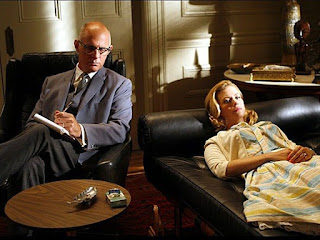
"We have a lot of scientifically verified psychosocial treatments, and yet it's very difficult for consumers to access them," says Brandon A. Gaudiano, a clinical psychologist and faculty member at Warren Alpert Medical School of Brown University................... Things have changed since the 1960s —  but there's still a long way to go. Many in the field are now saying it's long past time to bring evidence-based treatment to the practice of mainstream mental healthcare. A few efforts are finally moving the needle in that direction............... The NIMH has recently announced an Experimental Medicine Initiative , designed to bring the rigor and specificity of other fields of medicine to psychiatry, and — more specifically — psychotherapy, better-known as talk therapy. Read more >>>>>>>>>

Boys More Likely to Have Antipsychotics Prescribed, Regardless of Age

Image
NIH-funded Study is the First Look at Antipsychotic Prescriptions Patterns in the U.S. Anti-psychotics Used More in Boys than Girls  Despite concerns over the rising use of antipsychotic drugs to treat young people, little has been known about trends and usage patterns in the United States before this latest research, which was funded by the National Institute of Mental Health (NIMH).  Boys are more likely than girls to receive a prescription for antipsychotic medication regardless of age, researchers have found. Approximately 1.5 percent of boys ages 10-18 received an antipsychotic prescription in 2010. Read more >>>>>>

Woman Who Spent 30 YEARS Fighting Debilitating Cerebral Palsy Discovers She Has Been Misdiagnosed

Image
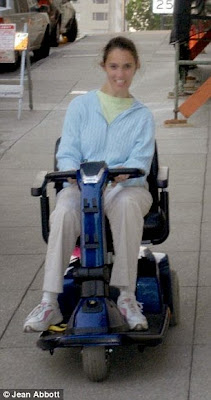
A woman who spent 30 years of her life believing that she suffered from cerebral palsy, only to learn that she had in fact been misdiagnosed and almost all of her symptoms could be cured with just one pill, insists she feels no resentment or anger about her doctor’s life-changing error. Jean  Sharon Abbott Jean Sharon Abbott 38, from Plymouth, Minnesota, was told she had spastic diplegia, a form of cerebral palsy, when she was just four-years-old. But after three decades of suffering from muscle spasms, weakness, near immobility, as well as undergoing painful surgical procedures, she learned at the age of 33 that she actually had dopa-responsive dystonia (DRD), a rare, yet treatable, muscle disorder............ .........And while Jean realized that there are so many things she wants to try now that she can, she still insists that she doesn't have any regrets about receiving her diagnosis so late in life. As someone who believes that everything happens for a reason, she ...

News on Human Behavior: Brain Scans Could Help Doctors Better Predict Your Behavior

Image
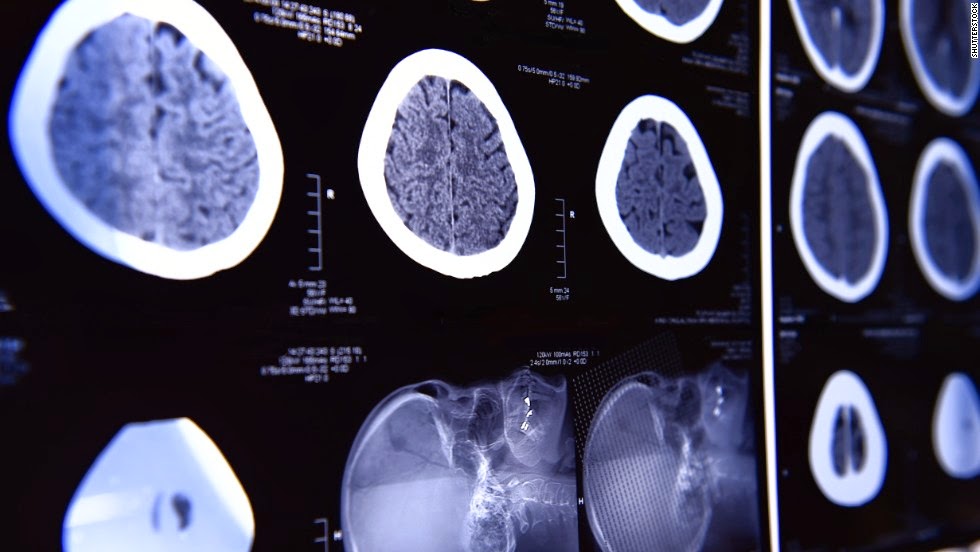
 (CNN REPORT):  Forget horoscopes or fortune tellers. There's a new way to tell your future, and it involves a much more reliable medium: human neuroscience. A new study looks at over 70 scientific publications about brain scans such as functional magnetic resonance imaging or electroencephalography, noninvasive tests that measure brain activity. The paper that runs in the latest edition of Neuron concludes that doctors might have more success treating some patients if they examined the way a person's brain functioned first. Brain scans have been used to make basic discoveries about human behavior for decades, but they are not routinely ordered to determine someone's overall health or course of treatment in the way as blood test are used. This new study suggests technology in this area has become so advanced that approaches to treatment would be more effective if brain scans were used more routinely. For instance, when someone is being treated f...

What's Behind the Dramatic Rise in Autism Cases?

Image
Dramatic Increase in Autism Diagnosis In 1994, the diagnostic criteria used by clinicians to establish psychiatric diagnoses were changed,  "This meant that autism was recognized as a range of disorders -- which is why we today call it autism spectrum disorder -- but it also meant changes in the specific symptoms that form the basis of an autism diagnosis," At least in Denmark, the researchers say, most of the increase -- 60 percent -- can be attributed to changes in diagnostic criteria and the inclusion of out-of-hospital diagnoses. These findings should provide some relief for parents who've worried that the increase in numbers was caused solely by more kids actually developing the disorder, the study authors suggested. Read more >>>

Denver Drug Court Second Chance: From Addict to Magistrate

Image
Judge Zweig Zweig, 44, started with the kind of occasional drug use common to members of his generation. He took mushrooms and LSD in high school and drank a lot in college. It was the late 1980s when, despite the “the whole Nancy Reagan don’t-do-drugs” messaging of the era, he says his recreational substance use didn’t affect his schoolwork or relationships like the public service announcements warned they would.................... Zweig went from detox to rehab, then back again – in and out, unable to get clean. Nothing worked. His parents kicked him out of their house and Zweig learned to survive homeless. He lived for a spell in a closet for rollaway beds in a Super 8 motel in northwest Denver. When he was kicked out of the Super 8, he took up residence in a grove of trees alongside I-25. In 1995, he was arrested for heroin possession and spent a night in jail going through withdrawal........ Read more>>>>

2014′s Best & Worst Cities for People with Disabilities: Augusta and Atlanta Ranked 13th and 39th in the Nation Respectively

Image
 A new ranking is offering insight on the nation’s best and worst places for people with disabilities to call home. Overland Park, Kan. is topping the analysis of the nation’s 150 most populated cities. Also rounding out the list’s top five cities for people with disabilities are Lubbock, Texas and three Arizona towns — Peoria, Scottsdale and Chandler. In observance of Disability Employment Awareness Month, WalletHub identified the cities with the most suitable conditions for individuals with disabilities. Put together by the consumer finance website WalletHub, the ranking factors three key areas — economic environment, quality of life and health care — to assess each locale and determine what the site called “the most suitable conditions for individuals with disabilities.” Specifically, each city was measured based on 23 factors ranging from the cost of living to the employment rate for people with disabilities in the area, walkability and the effectiveness o...